


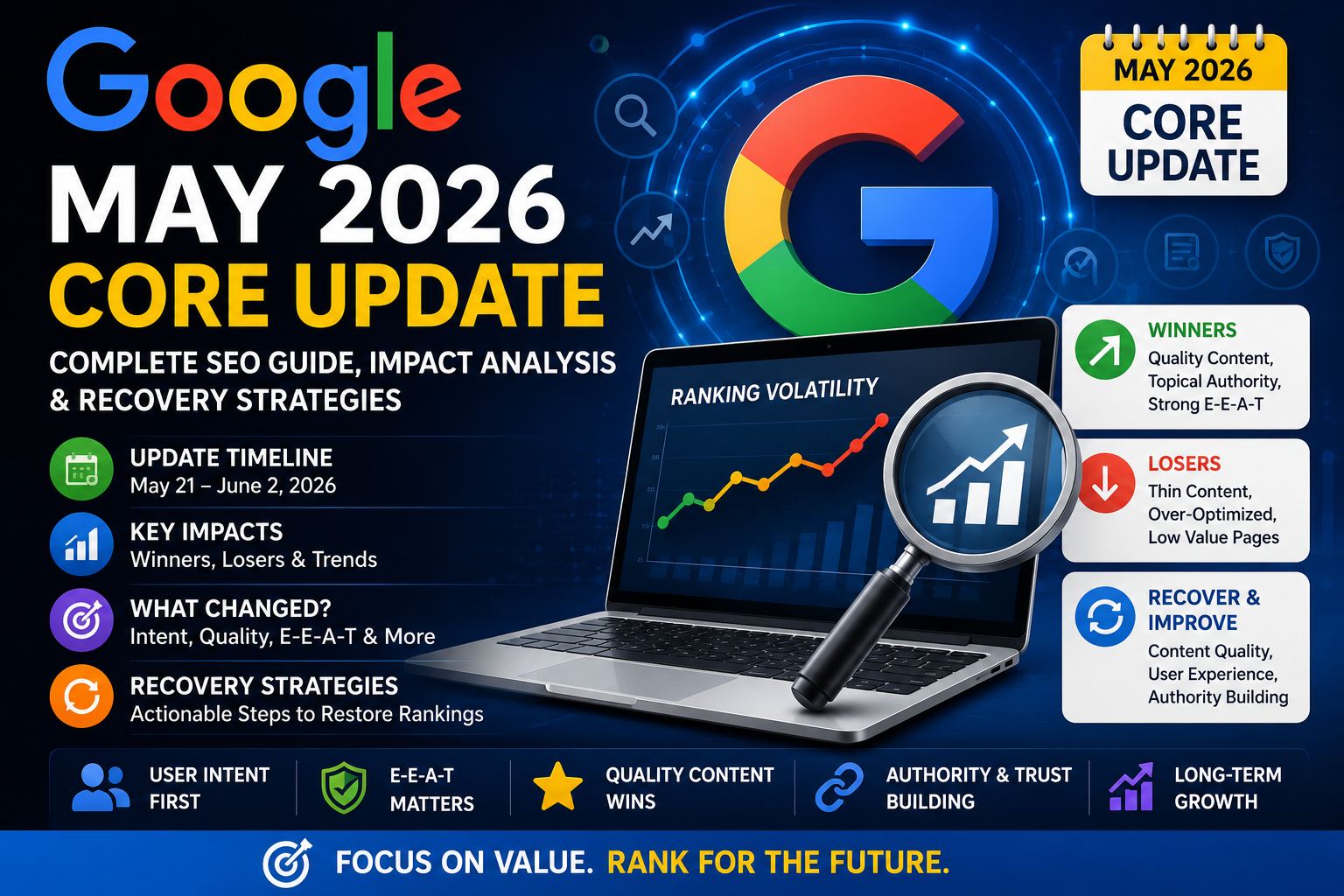
Google has officially completed the May 2026 Core Update, making it one of the most significant search algorithm updates of the year. The rollout started on May 21, 2026, and was fully completed on June 2, 2026. Like previous broad core updates, this update was designed to improve the quality and relevance of search results across all industries and languages.
For website owners, SEO professionals, bloggers, and digital marketers, understanding this update is critical because many websites experienced significant ranking fluctuations during the rollout period.
What Is the Google May 2026 Core Update?
A Google Core Update is a broad modification to Google’s ranking systems. Unlike spam updates or manual penalties, core updates do not target specific websites. Instead, they refine how Google evaluates content quality, relevance, authority, and user satisfaction.
Google described the May 2026 Core Update as a regular update intended to surface more relevant and satisfying content for users across all types of websites.
The update impacted:
- Blogs
- E-commerce websites
- Local businesses
- News publishers
- Affiliate websites
- SaaS companies
- Service-based businesses
Timeline of the May 2026 Core Update
The official rollout timeline was:
- Launch Date: May 21, 2026
- Rollout Completion: June 2, 2026
- Duration: Approximately 12 days
This was the second major Core Update of 2026, following the March 2026 Core Update. SEO tracking tools reported significant ranking volatility throughout the rollout period.
Major SEO Changes Observed
Although Google rarely shares specific ranking factors affected by core updates, SEO experts observed several important trends.
1. User Intent Matching Became More Important
Many websites that ranked based primarily on keyword optimization saw ranking declines if their content did not fully satisfy search intent.
Google appears to be rewarding content that directly answers user questions and provides complete solutions rather than simply targeting keywords.
2. Helpful Content Continues to Win
Websites providing unique insights, real-world expertise, original research, and practical advice generally performed better after the update.
Thin content, AI-generated content with little human editing, and pages created solely for rankings showed increased volatility.
3. Strong Topical Authority Gains Visibility
Sites covering entire topics comprehensively rather than publishing isolated articles appear to have gained visibility.
This reinforces the importance of topical clusters, pillar pages, and strategic internal linking.
4. Brand Trust Signals Matter More
Google continues to emphasize:
- Author expertise
- Business credibility
- User trust
- Reputation signals
- Accurate information
Websites with clear author bios, contact pages, privacy policies, and transparent business information often performed better.
The Role of AI Search in 2026
The May 2026 Core Update arrived shortly after Google announced major AI Search enhancements during Google I/O 2026. Google introduced new AI-powered search capabilities that aim to provide more intelligent and comprehensive answers directly within Search.
As AI becomes increasingly integrated into search results, websites must focus on creating content that demonstrates:
- Expertise
- Experience
- Originality
- Authority
- Trustworthiness
Simple keyword stuffing is no longer effective.
Winners of the Update
Based on industry observations, several types of websites appear to have benefited:
High-Quality Niche Websites
Websites focusing on a specific industry or niche with deep expertise gained visibility.
Authoritative Local Businesses
Businesses with strong local SEO foundations, quality reviews, and comprehensive service pages often improved rankings.
Comprehensive Resource Websites
Long-form guides, tutorials, case studies, and educational resources performed well because they provide substantial value to users.
Websites with Strong E-E-A-T Signals
Experience, Expertise, Authoritativeness, and Trustworthiness remain crucial ranking considerations.
Losers of the Update
Several website categories reported ranking declines:
Thin Content Websites
Pages with minimal value, duplicate information, or superficial content experienced losses.
Programmatic SEO Sites
Websites publishing thousands of low-value pages generated automatically faced increased scrutiny.
Over-Optimized Affiliate Sites
Affiliate websites focusing heavily on monetization without offering unique insights saw ranking volatility.
Content Farms
Large quantities of generic content created primarily for search engines rather than users struggled during the rollout.
How to Analyze Your Website After the Core Update
Google recommends waiting at least one week after a Core Update finishes before conducting detailed performance analysis.
Follow these steps:
Step 1: Review Google Search Console
Check:
- Total clicks
- Impressions
- Average position
- Top-performing pages
- Top search queries
Compare performance before and after the update.
Step 2: Identify Winning and Losing Pages
Determine:
- Which pages gained traffic
- Which pages lost visibility
- Which keywords changed rankings
This helps identify patterns.
Step 3: Analyze Search Intent
Ask yourself:
- Does the page fully answer the user’s question?
- Is the content more useful than competitors?
- Does the page provide unique insights?
Step 4: Improve Content Quality
Update pages with:
- Fresh information
- Better examples
- Statistics
- Visuals
- FAQs
- Expert insights
Recovery Strategies for Websites Affected
If your website lost rankings after the May 2026 Core Update, avoid making drastic changes immediately.
Instead:
Improve Existing Content
Focus on enhancing your most important pages.
Build Topical Authority
Create content clusters around your primary services and topics.
Strengthen Internal Linking
Connect related content strategically.
Demonstrate Expertise
Include:
- Author bios
- Professional credentials
- Industry experience
- Original research
Improve User Experience
Optimize:
- Page speed
- Mobile usability
- Navigation
- Content readability
SEO Priorities for the Rest of 2026
To remain competitive in Google’s evolving search ecosystem, focus on:
- Helpful content creation
- Topical authority development
- AI-friendly content structure
- E-E-A-T optimization
- Technical SEO improvements
- User experience enhancements
- Brand building
- Local SEO optimization
- Structured data implementation
- Continuous content updates
Final Thoughts
The Google May 2026 Core Update reinforces a consistent message from Google: create content for users, not search engines.
Websites that provide genuine value, demonstrate expertise, and satisfy user intent are more likely to succeed in today’s AI-driven search landscape. While ranking fluctuations are normal after core updates, businesses that focus on long-term quality rather than short-term SEO tricks will be best positioned for sustainable growth.
As Google Search continues evolving with AI-powered experiences, the future belongs to websites that combine authoritative content, exceptional user experience, and strong topical relevance.