


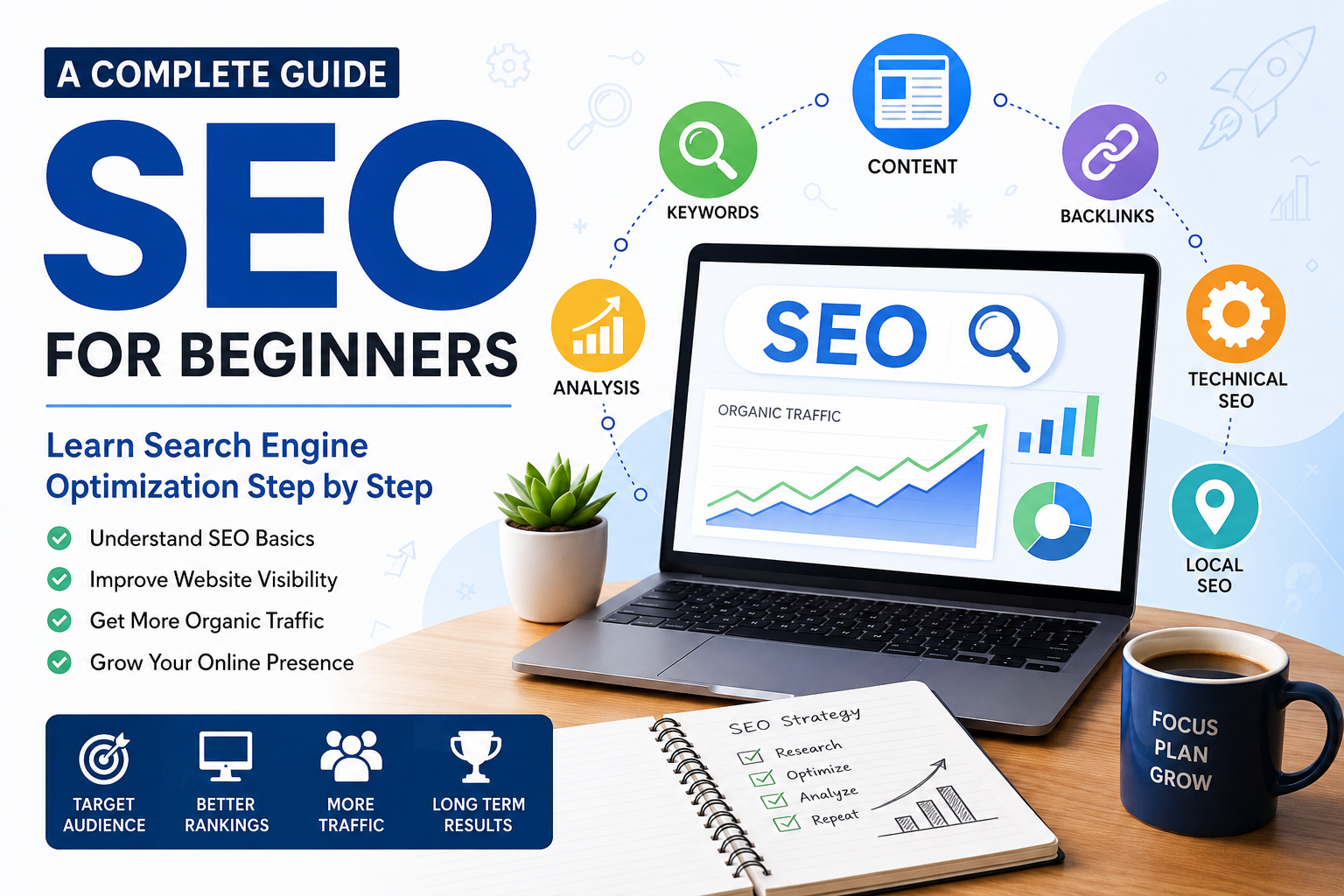
If you’ve ever wondered how some websites appear at the top of Google while others remain hidden on page ten, the answer is Search Engine Optimization (SEO). SEO is one of the most valuable digital marketing skills because it helps websites attract free, organic traffic from search engines like Google, Bing, and Yahoo.
Whether you’re a business owner, blogger, freelancer, or someone interested in digital marketing, learning SEO can help you increase website visibility, generate leads, and grow your online presence without relying entirely on paid advertising.
This beginner’s guide explains SEO in simple language and covers the essential concepts you need to start your SEO journey.
What is SEO?
SEO (Search Engine Optimization) is the process of improving a website so that search engines can understand its content and rank it higher for relevant search queries.
For example, if someone searches for “best running shoes”, Google displays thousands of websites. SEO helps your website become one of the top results.
The better your SEO, the greater your chances of receiving organic (free) visitors.
Why is SEO Important?
SEO offers long-term benefits that paid advertising cannot always provide.
Some of the biggest advantages include:
- Free organic website traffic
- Better online visibility
- Higher brand credibility
- Increased leads and sales
- Improved user experience
- Long-term return on investment
- Competitive advantage
Unlike paid ads that stop generating traffic once your budget runs out, SEO continues to bring visitors over time if your website maintains strong rankings.
How Search Engines Work
Search engines follow three basic steps:
1. Crawling
Google uses automated bots called crawlers (or spiders) to discover new and updated web pages.
These bots move from one webpage to another by following internal and external links.
2. Indexing
After crawling, Google analyzes the content and stores it in its massive database, called the index.
If your page isn’t indexed, it won’t appear in search results.
3. Ranking
When a user searches for something, Google compares millions of indexed pages and ranks the ones it believes provide the best answer.
Ranking depends on hundreds of factors, including:
- Content quality
- Page speed
- Mobile friendliness
- User experience
- Backlinks
- Keyword relevance
- Website authority
Types of SEO
SEO is generally divided into several categories.
1. On-Page SEO
On-page SEO involves optimizing everything that exists on your website.
Examples include:
- Keyword optimization
- SEO-friendly titles
- Meta descriptions
- Heading structure (H1, H2, H3)
- Internal linking
- Image optimization
- Content quality
2. Off-Page SEO
Off-page SEO focuses on improving your website’s authority through external signals.
Examples include:
- Backlinks
- Brand mentions
- Guest posting
- Social sharing
- Digital PR
Quality backlinks from trusted websites tell Google that your content is valuable.
3. Technical SEO
Technical SEO ensures search engines can crawl and index your website efficiently.
It includes:
- XML sitemap
- Robots.txt
- HTTPS security
- Mobile responsiveness
- Core Web Vitals
- Structured data (Schema)
- Canonical URLs
- Fixing broken links
4. Local SEO
Local SEO helps businesses appear in location-based searches.
For example:
- “Coffee shop near me”
- “SEO company in Toronto”
Important local SEO elements include:
- Google Business Profile
- Local citations
- Customer reviews
- NAP consistency (Name, Address, Phone)
What are Keywords?
Keywords are the words and phrases people type into search engines.
Examples include:
- SEO for beginners
- Best laptop under $1000
- Car repair near me
- Digital marketing course
Choosing the right keywords helps Google understand what your content is about.
Types of Keywords
Short-tail Keywords
These are broad search terms.
Examples:
- SEO
- Shoes
- Marketing
High competition but high search volume.
Long-tail Keywords
These are longer and more specific.
Examples:
- SEO tips for beginners
- Best running shoes for flat feet
- Affordable SEO services for small businesses
Long-tail keywords are usually easier to rank for and often have better conversion rates.
Creating SEO-Friendly Content
Content is one of the biggest ranking factors.
Good SEO content should:
- Answer user questions
- Be original
- Be easy to read
- Include headings
- Include keywords naturally
- Offer useful information
- Stay updated
Avoid keyword stuffing because Google may consider it spam.
Instead, write naturally for readers first and optimize for search engines second.
Importance of Title Tags
Your page title is often the first thing users see in search results.
A good title should:
- Include the primary keyword
- Be engaging
- Stay under about 60 characters
- Clearly describe the page
Example:
SEO for Beginners: Learn Search Engine Optimization Step by Step
Meta Descriptions
A meta description summarizes your page.
Although it isn’t a direct ranking factor, it can improve click-through rates.
Good meta descriptions:
- Stay under about 155 characters
- Include the main keyword
- Encourage users to click
Internal Linking
Internal links connect pages within your own website.
Benefits include:
- Better website navigation
- Improved crawlability
- Increased page authority
- Longer visitor sessions
Every important page should receive links from relevant content.
Image Optimization
Images improve user experience but should also be optimized.
Best practices include:
- Compress images
- Use descriptive filenames
- Add alt text
- Choose modern formats like WebP when possible
- Avoid oversized image files
Fast-loading images improve SEO and user satisfaction.
Website Speed Matters
Users expect websites to load quickly.
Slow websites often experience:
- Higher bounce rates
- Lower conversions
- Poor rankings
Improve speed by:
- Compressing images
- Using browser caching
- Reducing unnecessary plugins
- Minimizing CSS and JavaScript
- Using a Content Delivery Network (CDN)
Mobile SEO
More than half of web traffic comes from mobile devices.
Your website should:
- Work on all screen sizes
- Load quickly
- Have readable text
- Feature clickable buttons
- Avoid horizontal scrolling
Google primarily evaluates the mobile version of websites for ranking purposes.
Understanding Backlinks
Backlinks are links from other websites pointing to yours.
Think of them as recommendations.
High-quality backlinks from trusted websites can improve rankings significantly.
Avoid buying spammy backlinks, as they can lead to penalties.
Common SEO Mistakes Beginners Make
Many beginners unknowingly hurt their rankings.
Some common mistakes include:
- Publishing thin or duplicate content
- Ignoring keyword research
- Missing title tags
- Slow-loading pages
- Poor mobile optimization
- Broken links
- Keyword stuffing
- Not updating old content
- Forgetting image optimization
Avoiding these mistakes can make a noticeable difference over time.
Helpful SEO Tools for Beginners
Several free and paid tools can simplify your SEO efforts.
Popular options include:
- Google Search Console
- Google Analytics
- Google Keyword Planner
- Google Trends
- Ubersuggest
- Ahrefs
- SEMrush
- Screaming Frog SEO Spider
- PageSpeed Insights
Start with the free tools and expand your toolkit as your needs grow.
SEO Takes Time
One of the most important lessons for beginners is that SEO is a long-term strategy.
Unlike paid advertising, results don’t happen overnight.
Depending on your competition, it may take several months before you notice meaningful improvements in rankings and traffic.
Consistency is the key to success.
Continue publishing quality content, improving your website, and earning trustworthy backlinks.
Final Thoughts
SEO may seem overwhelming at first, but once you understand the fundamentals, it becomes much easier to apply. Focus on creating helpful content, optimizing your website for users, and following search engine best practices. Over time, these efforts can lead to better rankings, increased organic traffic, and stronger online visibility.
Remember that SEO is constantly evolving. Search engines regularly update their algorithms, so staying informed about new trends and best practices is essential. Keep learning, testing, and improving your website. With patience and consistency, even beginners can build a strong SEO foundation and achieve sustainable growth in search engine rankings.