


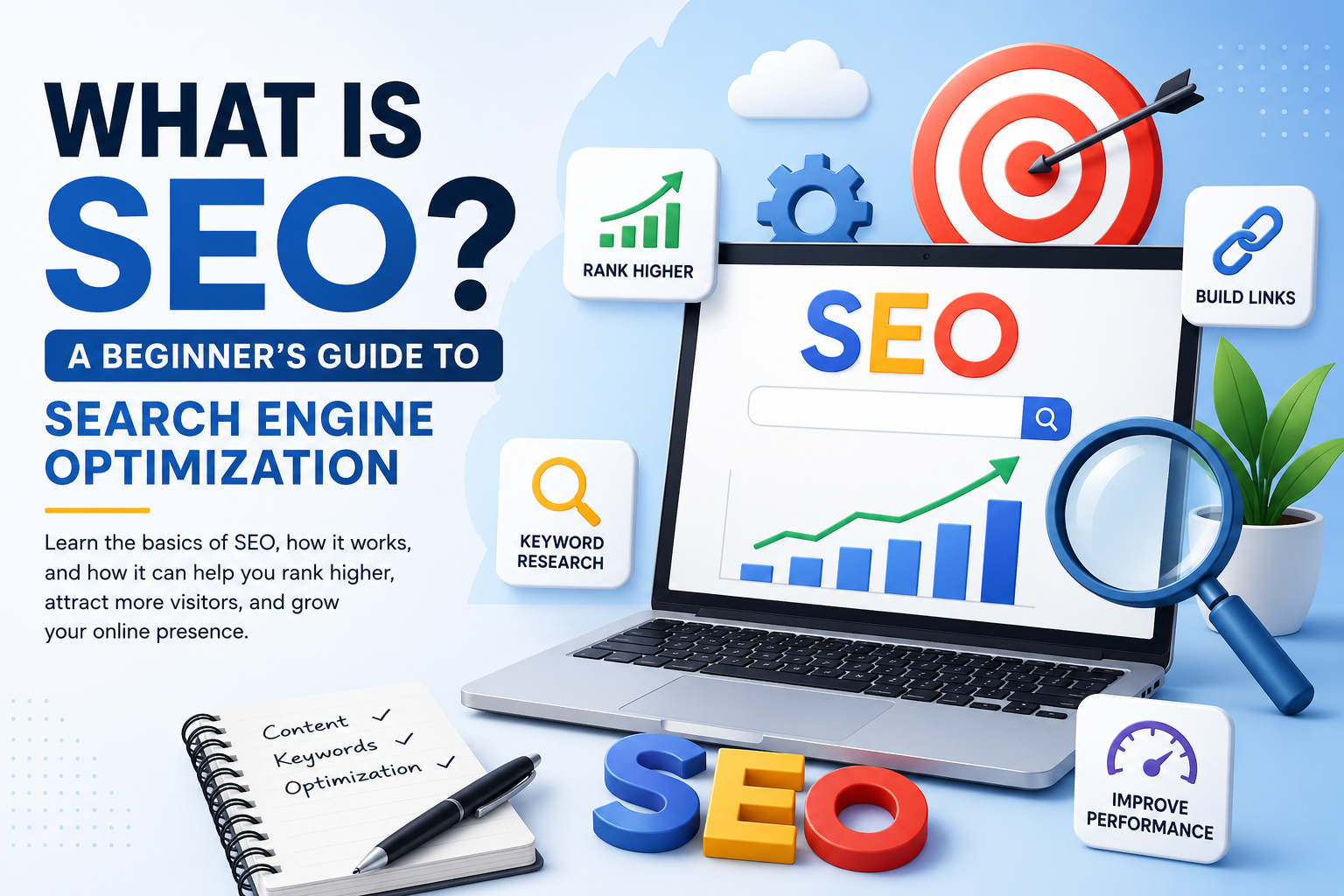
In today’s digital world, having a website is not enough. If people cannot find your website on search engines like Google, your content, products, or services may go unnoticed. This is where SEO comes in.
SEO, or Search Engine Optimization, is one of the most important digital marketing strategies for improving a website’s visibility online. Whether you own a business, run a blog, or manage an e-commerce store, understanding SEO can help you attract more visitors and grow your online presence.
What is SEO?
SEO stands for Search Engine Optimization. It is the process of optimizing a website so that it ranks higher on search engine results pages (SERPs) when users search for relevant keywords.
For example, if you own a bakery and someone searches for “best chocolate cake near me,” SEO helps your website appear among the top search results. The higher your website ranks, the more likely people are to visit it.
The primary goal of SEO is to increase organic traffic, which means visitors who come to your website naturally through search engines rather than through paid advertisements.
Why is SEO Important?
SEO is important because billions of searches are conducted every day. People use search engines to find information, products, services, and solutions to their problems.
Some key benefits of SEO include:
1. Increased Website Traffic
Higher rankings lead to more clicks and visitors. Most users rarely go beyond the first page of search results.
2. Better User Experience
SEO encourages website owners to create fast, user-friendly, and informative websites.
3. Builds Trust and Credibility
Websites that rank highly are often perceived as more trustworthy and authoritative.
4. Cost-Effective Marketing
Unlike paid advertising, SEO can generate long-term traffic without ongoing advertising costs.
5. Higher Conversion Rates
Targeted traffic from search engines often results in better leads and sales because users are actively searching for specific information or products.
How Do Search Engines Work?
To understand SEO, it’s helpful to know how search engines work.
Search engines generally follow three steps:
Crawling
Search engines use bots, often called crawlers or spiders, to discover web pages across the internet.
Indexing
Once a page is found, the search engine analyzes its content and stores it in a massive database called an index.
Ranking
When a user performs a search, the search engine evaluates indexed pages and displays the most relevant results based on hundreds of ranking factors.
SEO helps search engines understand your website better, increasing the chances of ranking higher.
Types of SEO
SEO can be divided into several categories.
1. On-Page SEO
On-page SEO involves optimizing elements directly on your website.
Examples include:
- Creating high-quality content
- Using relevant keywords
- Writing effective title tags
- Optimizing meta descriptions
- Using proper heading tags (H1, H2, H3)
- Internal linking
- Image optimization
For example, if your article is about digital marketing, you should naturally include keywords related to digital marketing throughout the content.
2. Off-Page SEO
Off-page SEO focuses on activities outside your website that improve its authority.
The most common off-page SEO technique is link building, which involves earning backlinks from other reputable websites.
Examples include:
- Guest blogging
- Social media promotion
- Influencer outreach
- Brand mentions
- Online PR campaigns
Quality backlinks act like votes of confidence and can improve search rankings.
3. Technical SEO
Technical SEO ensures that search engines can easily crawl and index your website.
Important technical SEO factors include:
- Website speed
- Mobile-friendliness
- Secure HTTPS connections
- XML sitemaps
- Structured data
- Fixing broken links
- Optimizing website architecture
A technically sound website provides a better experience for both users and search engines.
Understanding Keywords
Keywords are the words and phrases people type into search engines.
For example:
- “SEO tips”
- “Best laptops for students”
- “How to start a blog”
Keyword research helps identify terms your target audience is searching for.
There are three main types of keywords:
Short-Tail Keywords
Broad terms with high search volume.
Example:
- SEO
Long-Tail Keywords
More specific phrases with lower competition.
Example:
- Beginner SEO guide for small businesses
Local Keywords
Used for location-based searches.
Example:
- SEO agency in Delhi
Using the right keywords helps search engines understand the topic of your content.
Essential SEO Ranking Factors
Search engines consider many factors when ranking websites. Some of the most important include:
Content Quality
Content should be useful, informative, original, and relevant to user intent.
Backlinks
Links from authoritative websites can improve credibility and rankings.
User Experience
A clean design, easy navigation, and fast loading times contribute to better rankings.
Mobile Optimization
Since most searches happen on mobile devices, responsive websites are essential.
Page Speed
Slow websites often experience higher bounce rates and lower rankings.
Search Intent
Your content should match what users are actually looking for when they search.
Common SEO Tools
Several tools can help beginners improve their SEO efforts.
Google Search Console
Helps monitor website performance and indexing issues.
Google Analytics
Tracks website traffic and user behavior.
Ahrefs
Provides keyword research and backlink analysis.
SEMrush
Offers SEO, content marketing, and competitor analysis features.
Moz
Provides keyword tracking and SEO insights.
Basic SEO Tips for Beginners
If you are just starting with SEO, follow these simple tips:
- Focus on creating valuable content.
- Perform keyword research before writing.
- Use keywords naturally throughout your content.
- Optimize title tags and meta descriptions.
- Make your website mobile-friendly.
- Improve page loading speed.
- Build quality backlinks.
- Use internal links to connect related pages.
- Update old content regularly.
- Track performance using SEO tools.
Common SEO Mistakes to Avoid
Many beginners make mistakes that can hurt rankings.
Avoid these practices:
- Keyword stuffing
- Copying content from other websites
- Buying low-quality backlinks
- Ignoring mobile users
- Publishing thin or low-quality content
- Neglecting technical SEO
- Using misleading titles
Search engines prioritize websites that provide genuine value to users.
The Future of SEO
SEO continues to evolve as search engines become smarter. Emerging trends include:
- Artificial Intelligence (AI)
- Voice search optimization
- User experience signals
- Video SEO
- Local SEO growth
- Semantic search
Businesses and content creators who adapt to these changes will have a competitive advantage in search results.
Conclusion
SEO is a powerful strategy that helps websites improve their visibility on search engines and attract organic traffic. By understanding how search engines work, optimizing content, targeting the right keywords, and focusing on user experience, beginners can build a strong foundation for long-term online success.
While SEO may seem complex at first, starting with the basics and consistently applying best practices can lead to significant results over time. Remember that SEO is not a one-time task but an ongoing process of improvement, learning, and adaptation. With patience and dedication, anyone can use SEO to grow their website, reach a larger audience, and achieve their digital goals.